Turning The Stylus
Since Ancient Times, writing has always been about rewriting. Plus, a review of my dictation and editing workflow.

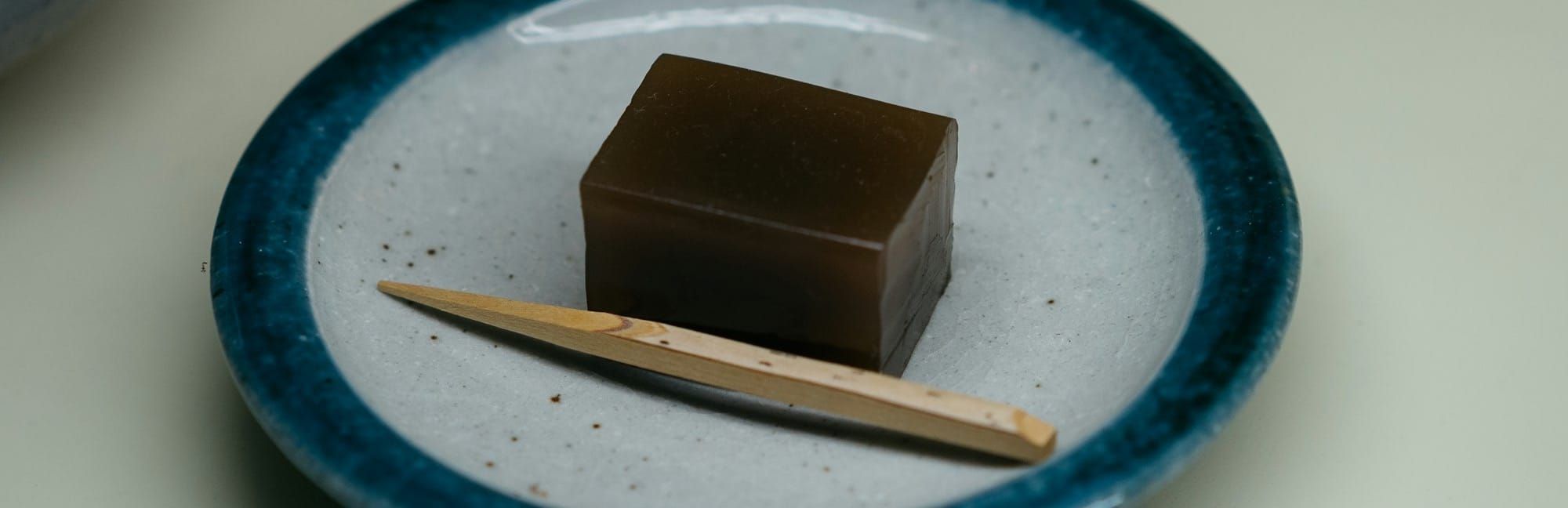
Writers during the Roman Empire used wax tablets with a small wooden rod (I presume it was wood). One end was sharp and the other blunt. The sharp end of this "stylus" carved words into the pliable wax and then the blunt end was used to erase the wax markings.

This led Roman lyrical poet and satirist Horace to write, in The Satires of Horace around 35 B.C.E.:
Saepa stilum vertas,
iterum quae digna legi sint scripturas.
Literally, that translates to:
Turn the stylus frequently
to write something worthy of being reread.
Horace obviously understood editing. The first version of anything is always the hardest to make. It's not a fully formed human, but closer to a skeletal structure. Only with time, dedication, and a sustained commitment to excellence can it ever be transformed into something really special. Writing is rewriting.
The Dictation Trials of a First Draft
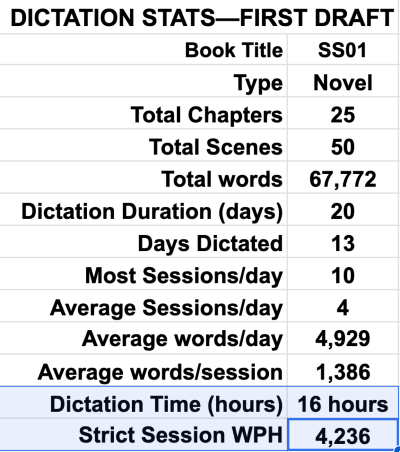
The dictated first draft for my debut novel, A Spy Forged, clocked in at 67,772 words. Not too shabby for only 16 hours of actual dictation time (spread over 20 days). I was aiming for 90,000 words, but I knew I'd bulk it back up in editing.
Using Focusmate to force my butt into a chair, I got best results by starting with a continuous 75–90 minute session to convert four scenes of the (battle-tested) outline into a "dictation beat outline". Immediately after, I scheduled four 25 minute sessions to dictate one scene per session; scenes rarely took longer than 23 minutes. The most number of sessions I did in one day was 10 (to finish the manuscript!) which yielded 12,175 words. My brain was mush by the end.
I record dictation stats for each session so I know if I'm improving or not. I want to get to 5,000 words per hour (WPH) on average, but my current average is 4,236 words per hour. That's around 71 words per minute. If I can dictate 1%–10% faster than that, then I'm getting better. And I'm not killing my wrists.
My Editing Workflow
Editing my novel involves poring over all 50 scenes to generate a comprehensive to do list of everything to fix. This includes listing genre tropes to add, improving character/setting descriptions, spotting obvious (or subtle) plot holes... anything. As of right now, I have over 21 pages of single-spaced edits and I'm still only halfway through generating the to do list.
Before I can even tackle that to do list, I must also make three support docs: a Timeline (what happens and when, including before the story starts), Scene List (who does what & where), and a Settings Map (important places & what they look like). Using all three documents in tandem, I can easily navigate around the manuscript to fix anything.
After that insane to do list is finally complete, I sort each item by difficulty and address the biggest things first, ending with the tiniest fixes. As I do this, even more things get added to the to do list as I go. Alas, welcome to Stylus Turning!
If this method sounds familiar, it's straight from Rachel Aaron's amazing book, 2k to 10k: Writing Faster, Writing Better, and Writing More of What You Love. Her straightforward process minimizes confusion for a mammoth task that feels insurmountable. 5/5 stars!
My Morbid Antidote for Imposter Syndrome
First drafts make me question whether I should be a writer at all. This always happens. It happens to all creatives, no matter how masterful. In The War of Art, Steven Pressfield calls this annoying counter-current 'resistance'. I mean, Lawrence Olivier used to get stage fright before going on stage... Lawrence Olivier!
Editing a manuscript that you know is scheduled for public distribution feels no different than walking into a public plaza knowing you're about to strip naked. And publishing that manuscript actually feels like you're stripping naked!
So how do you foil your brain's misinformed attempt to keep you safe from harm? How can you stay motivated when your mind is screaming like a petulant child that everything you do is bad bad bad bad? (LOL brain... nice try!)
Here's what I do, and I know this is extreme, but that's why I love it: Instead of getting excited about editing my first draft—about which I have already celebrated that herculean act of completion—I simply lower expectations as low as I can push them. Instead of being starry-eyed and having my hopes mercilessly self-ridiculed, I evaluate each scene on a scale of, "how much do I want to kill myself after reading this?"
I'm happy to report that my answer is almost always, "hey, I don't want to kill myself at all!" If I ever do feel bad about my writing, I console myself by embracing the fact that it could be so so so much worse. But it never is.
(N.B. I'm never suicidal, so such a gallows-humor exaggeration frames this with just enough humor to remind me that I appear to know something about writing after all. Of course, if you have suicidal thoughts, dial 988. Life can sucks sometimes—it always gets better.)