The Four Narrative Modes: Case Study of Iain M. Banks' Consider Phlebas
Ever wonder why some writing feels "faster" than other writing?

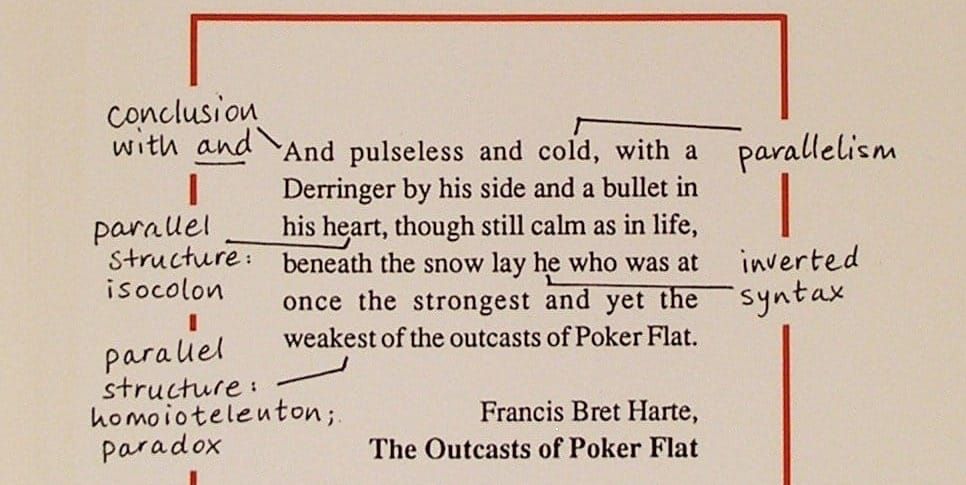
In the early 90s, I was fortunate enough to pick up a small book titled The Narrative Modes: Techniques of The Short Story by Helmut Bonheim, a literary academic. Bonheim instantly gained my respect by starting his book with all the reasons why his academic approach was flawed. In a society teeming with voices clawing for ideological primacy, Bonheim's unassuming and even self-effacing approach felt deeply honest. Most books on storytelling (and honestly most books on anything) boldly claim to "have the solution", so Bonheim saying he hadn't figured it all out made me love him all the more.
Speech, Report, Description, Commentary
Bonheim suggests there are really only four kinds of "modes" in narrative: Speech, Report, Description, and Commentary. When you read each of these modes in a narrative, Bonheim says, each mode tends to have a unique reading velocity: because commentary deals in abstraction, it can seem "dry" or that "nothing happens" which means its reading velocity is so slow that it feels glacial. Description is more concrete than commentary, but still feels slow. By contrast, report and speech both feel very fast, and speech—especially dialog—tends toward conflict and thus feels like the story is unfolding in front of you. Last of all, report—which is a kind of description but only of moving things—feels the fastest mode because report can fast forward over minutes, hours, weeks... even millennia.
As a thought experiment on writing, I decided to use Bonheim's method in a short case study. I wrote up some abbreviated definitions of each mode (they are a mix of my own words and definitions ripped straight from Bonheim), then color-coded each mode. Below is a more detailed description of each narrative mode, along with their respective color-codes:
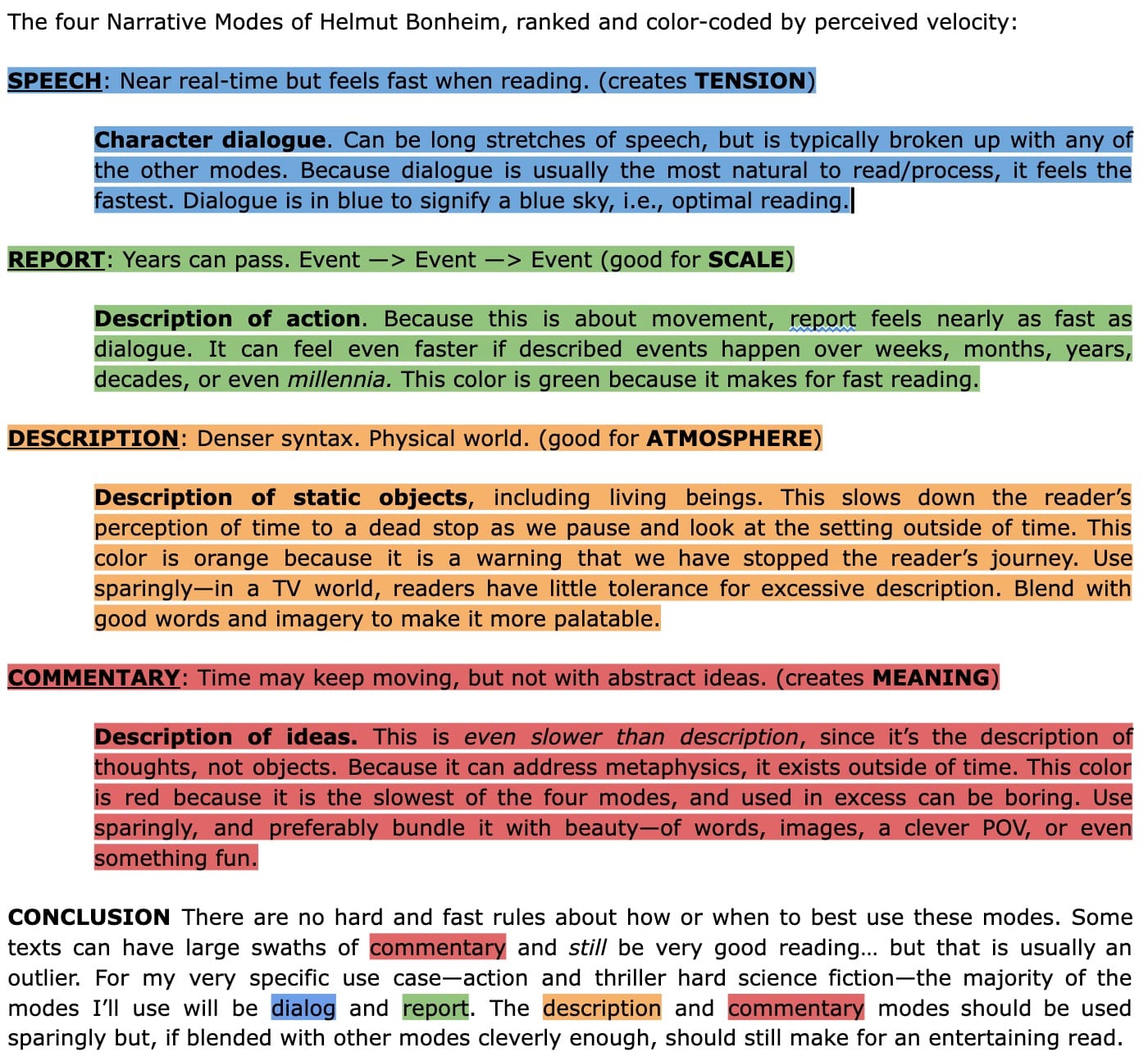
By color-coding each mode according to reading velocity—dialog and report get the "friendly" colors blue and green, and description and commentary get the "hostile" colors orange and red—a visual shorthand becomes visible as authors mix each mode according to their unique narrative style.
Consider Phlebas
Below is a short scene from Iain M. Banks' Consider Phlebas, where Horza (the protagonist) is trying to figure out his new captain, Kraiklyn. "It was neat and tidy," and "It looked powerful" are both comments about the setting instead of simple descriptions of the setting, but if you think of both comments and descriptions as "slow" for the reader, then any speech or report added into that mix will feel as if the author suddenly tapped the gas.
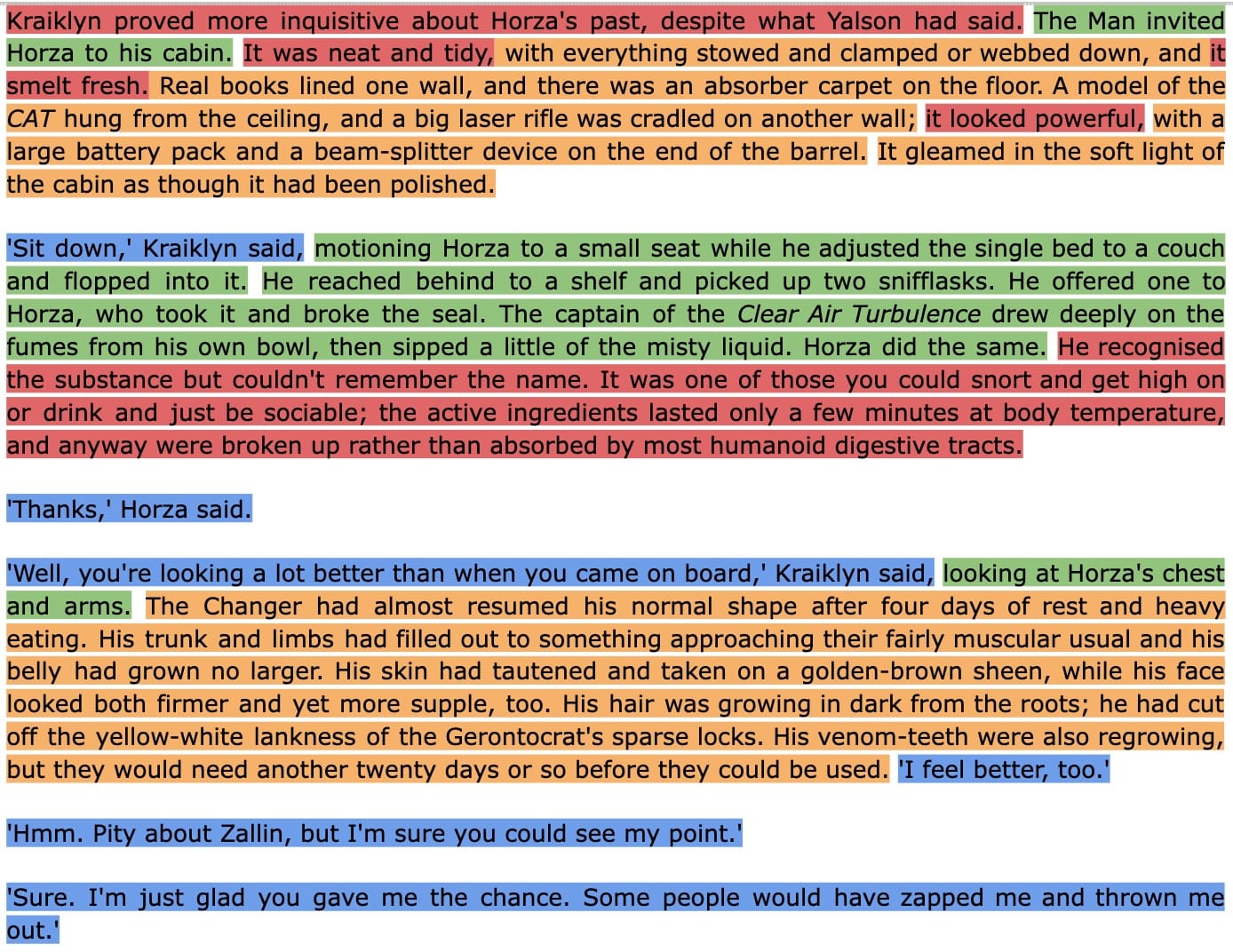
Note how long sections of potentially boring description are peppered with more engaging modes of speech and report. The commentary section near the end is made more palatable not only by being mercifully sparse, but by providing necessary contextual information for the story.
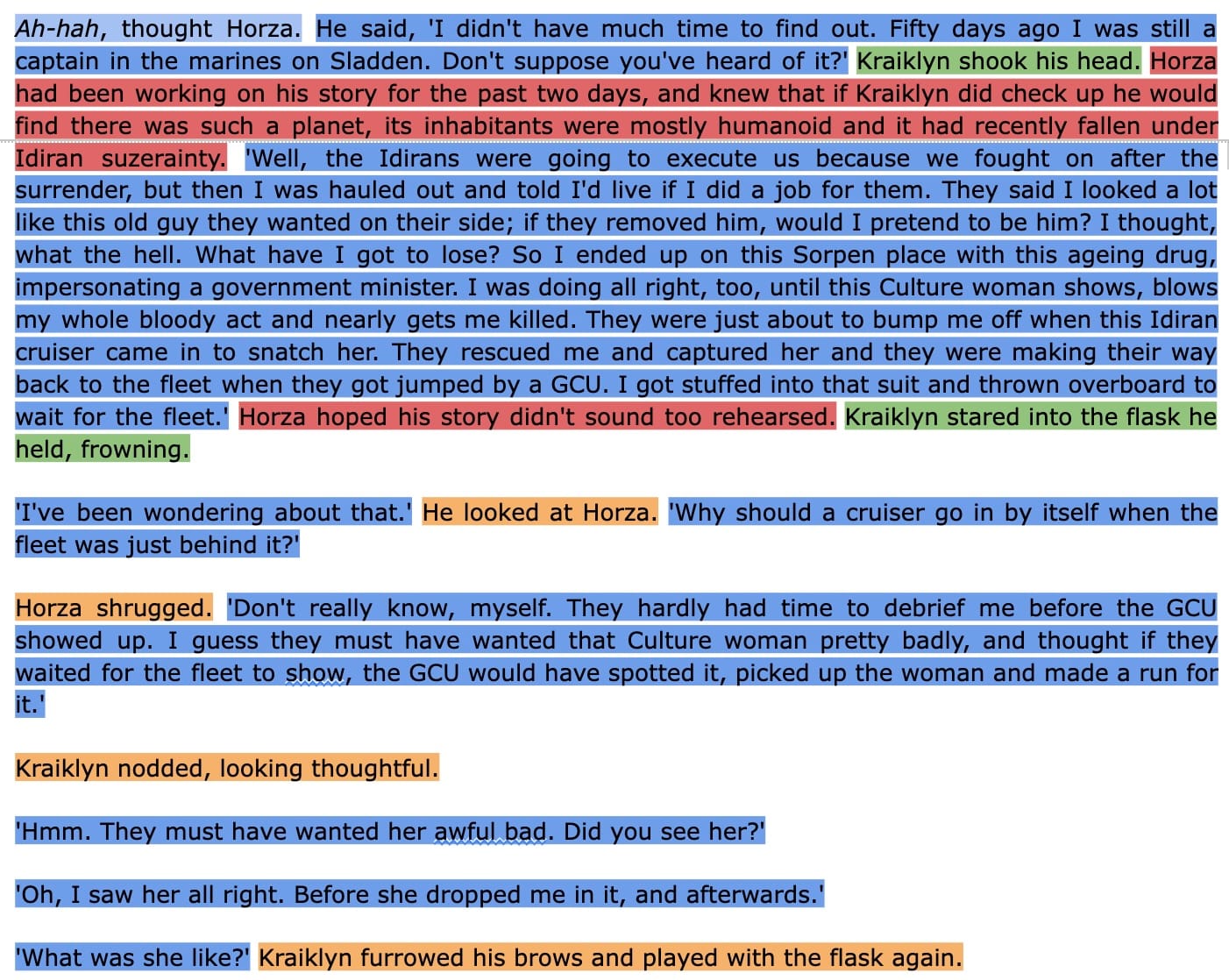
Later in the scene, Horza's long speech includes quick blurbs of boring commentary and report, with additional speech only broken up by staccato description. Horza's speech is a Big Lie, and his life depends on selling it to Kraiklyn. The remaining tiny bits of description and commentary masterfully keep focus on the scene's tension, instead of drawing out the scene unnecessarily:
Banks was a great writer and there is much gold to be unearthed by taking the time to do this kind of deep level line analysis on any literary master, and always with a tacit expectation that we will one day internalize these lessons when writing our own work.